Nonverbal communication skills is an essential part of our daily lives, as we often transmit and receive messages through our facial expressions, tone of voice, posture, and gestures. Although verbal communication is important, non-verbal communication can be even more powerful, since it can influence how others perceive us and how we interact with them.
While many of us are aware of our verbal communication, we often don’t pay enough attention to our non-verbal communication. However, being aware of how our nonverbal communication is presented can have a significant impact on our ability to communicate effectively and build strong relationships.
In this context, improving our non-verbal communication skills can be a key task to develop more effective and successful interpersonal relationships. From paying attention to our posture and gestures, to maintaining eye contact and reading the body language of others, there are many things we can do to improve our non-verbal communication skills.
In this blog, we will focus on providing information and practical advice for those who wish to improve their non-verbal communication skills.
So read on and find out how you can improve your non-verbal communication skills!
-
Pay attention to our posture
Our posture can send powerful messages about how we feel and our disposition towards the other person. If we adopt a closed posture, such as crossing our arms or legs, we can appear defensive or unable to interact. Instead, an open and relaxed posture can show that we are open to conversation and ready to interact in a positive way.
-
Control our gestures
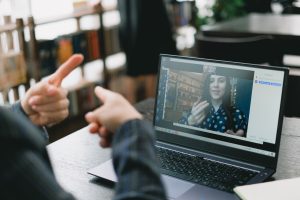
Our gestures can be an effective way to communicate emotion and energy, but it is important to make sure that they are aligned with our message and that they do not distract the other person. If our gestures are too large or inappropriate, they can send confusing messages and distract the other person from the message we are trying to communicate.
-
Maintain eye contact
Eye contact is a powerful way to show interest and respect for the other person. When we maintain eye contact, we send a message that we are present in the moment and engaged in the conversation. If we avoid eye contact, we may appear disinterested or uncommitted to interacting.
-
Learning to read the body language of others
Body language can provide important information about how the other person is feeling and what message they are trying to convey. If we can accurately read the body language of others, we can adjust our communication accordingly to ensure that we are correctly understanding what they are saying.
-
Practice empathy
Empathy is the ability to put yourself in another person’s shoes and understand their feelings and perspectives. If we can practice empathy, we can communicate more effectively and show that we understand and respect the other person’s feelings.
-
Being aware of our surroundings
The environment we find ourselves in can have a significant impact on our non-verbal communication. If we are in a noisy or dimly lit environment, it can be difficult to communicate effectively. By being aware of our surroundings and adjusting our communication accordingly, we can ensure that our message is getting across effectively.
-
Constantly practice
As with any skill, practice is essential to improve our non-verbal communication skills. If we can practice our nonverbal communication in everyday situations, such as conversations with friends or co-workers, we can build our confidence and improve our ability to communicate effectively.
-
Using voice intonation
Voice intonation can convey emotions and add meaning to our words. If we speak in a monotone or without emotion, we can appear bored or disinterested. On the other hand, if we use a varied and appropriate intonation, we can show enthusiasm and commitment.
-
Control our rate and rate of speech
Our rate and rate of speech can influence how our communication is perceived. If we talk too fast, we can appear anxious or nervous. If we speak too slowly, we can appear bored or unengaged. It is important to find a balance and adjust our pace and speed of speech according to the situation.
-
Demonstrate confidence
Confidence in our non-verbal communication can influence how our message is perceived. If we are nervous or insecure, we can appear unconvincing. By demonstrating confidence in our posture, gestures, and body language, we can increase the credibility of our message.
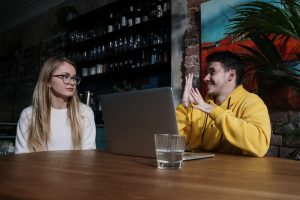
In conclusion, our non-verbal communication skills are vital to our ability to communicate effectively with others. By paying attention to our posture, gestures, facial expressions, eye contact, and other aspects of nonverbal communication, we can ensure that our intentions are clearly conveyed to the other person.
Furthermore, we have seen that our non-verbal communication skills can influence how others perceive us, which can have a significant impact on our interpersonal relationships and our professional lives. Proper nonverbal communication can help us create a positive impression, establish an emotional connection, and demonstrate trust and credibility.
It is important to remember that our non-verbal communication skills are not innate, but rather can be learned and honed through practice and awareness of our own behavior patterns. By spending time and effort improving our non-verbal communication skills, we can significantly improve our relationships and communicate more effectively with others.
If you are interested in how to improve your nonverbal communication skills, go to our website and take a look at our job offers.
You might also be interested in: