What is energy?
Energy is the ability to perform anything that involves a change (a movement, a temperature variation, a transmission of waves, etc.) For all these types of actions the intervention of energy is necessary.
Energy can manifest itself in many different ways, for example:
Kinetic energy: consists of the ability to do work associated with the motion of bodies.
Thermal energy: it is based on the manifestation of kinetic energy, the sum of the microscopic contributions of the particles that form a substance and is closely related to the temperature of the substance.
Potential energy : It is the energy accumulated in certain circumstances according to the specific configuration of a body with respect to a system of bodies. Thus, bodies have the capacity to do work, even if they are not in motion and regardless of the amount of thermal energy they possess due to the agitation of their molecules.
Although the same amount of energy can do the same amount of work, depending on how this energy manifests itself (kinetic, thermal or potential), it can be used better or worse when performing an action.
Where does energy come from?
On Earth, almost all the energy used by man has its origin in the sun. The great amount of energy that the sun produces reaches our planet in the form of electromagnetic radiation that gives us light and heat, and in this way makes life on our planet possible. This energy that reaches us from the sun can be harnessed in the following ways:
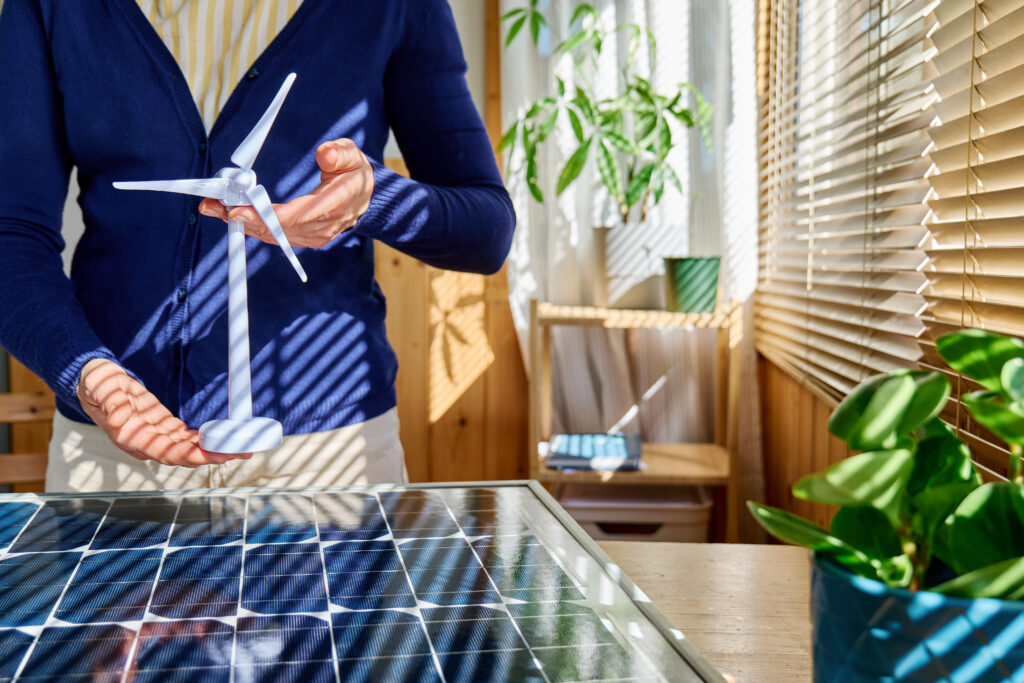
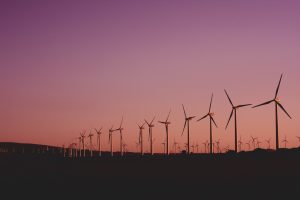
Wind power
The direct action of the Sun’s rays on the atmosphere creates temperature differences that give rise to winds, waves and rain. Therefore, all these are sources of energy come directly from the sun and, asl well as, from the wind.
Hydropower
It is obtained from the use of the kinetic and potential energies of water currents, waterfalls or tides. Besides, it can be transformed at different scales.
Solar térmica
It consists of harnessing the sun’s energy to produce heat that can be used for: cooking food, producing hot water for domestic water consumption, whether domestic hot water, heating for the production of mechanical energy and, from it, electrical energy.
Photovoltaic
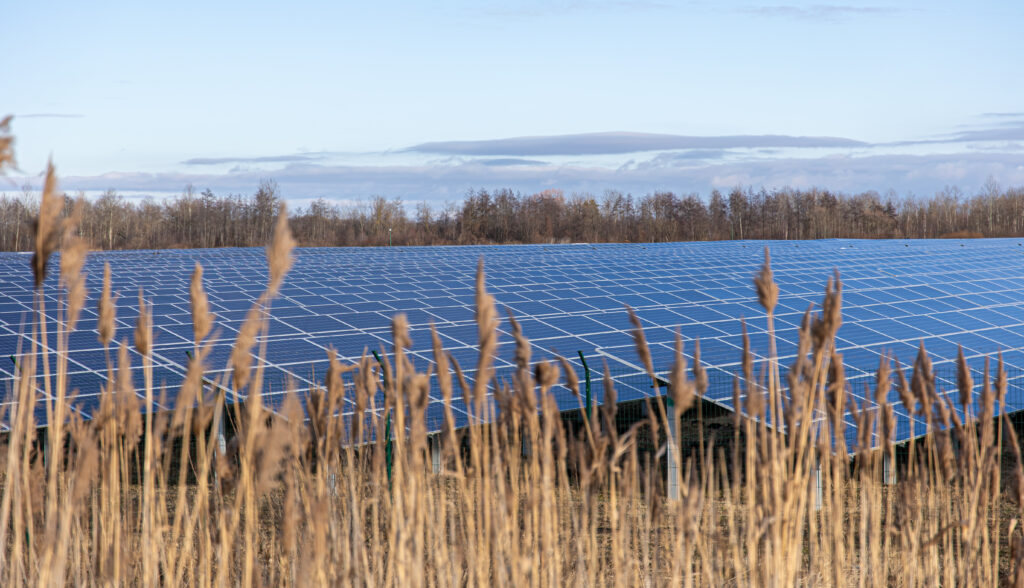
It is a source of energy that produces electricity of renewable origin, obtained directly from solar radiation by means of a semiconductor device called a photovoltaic cell, or by a deposition of metals on a substrate called a thin-film solar cell.
Electrical
The electrical energy does not come directly from the sun, nor are there electricity deposits, nor is it stored. That is to say, that it is generated at the very moment it is consumed.
There are two types of resources to obtain electricity. On the one hand, we have the sun, water and wind, unlimited resources that are periodically available to us and are known as renewable resources. On the other hand, we have non-renewable resources: coal, oil, natural gas and uranium, which are extracted from the Earth and transported to transformation centers, where electricity or petroleum products are produced.
What is nuclear fusion energy?
The nuclear fusion energy is a reaction that occurs when two low-density nuclei subjected to high temperatures fuse and form a heavier nucleus; this reaction releases a large amount of nuclear energy.
This nuclear reaction is caused by two nuclei of light atoms, generally hydrogen and its isotopes (deuterium and tritium), that join to form another heavier nucleus, generally releasing particles in the process. These reactions can absorb or release energy, depending on whether the mass of the nuclei is greater or less than that of iron, respectively.
For a fusion reaction to take place, it is necessary to reach high energy levels that allow the nuclei to approach each other at very short distances where the force of nuclear attraction overcomes the forces of electrostatic repulsion. For this, the following requirements must be met:
- To achieve the necessary energy, particle accelerators should be used or very high temperature heating can be resorted to. The latter solution is called thermal fusion and involves heating the atoms to a gaseous mass called plasma, which consists of free electrons and highly ionized atoms.
- It is also necessary to ensure the confinement and control of the plasma at high temperatures in the cavity of a fusion reactor for the time necessary, so that the reaction takes place.
- It is also important to achieve a plasma density sufficient for the nuclei to be close to each other and to enable fusion reactions to take place.
Is nuclear fusion the energy of the future?
The answer is complex, almost as complex as the difficulties involved in producing energy on Earth by replicating the Sun’s processes.
Beyond the advances in the large international projects, the best proof that nuclear fusion is an energy of the future is that, there are already companies that are investing in the construction of private fusion prototypes. It is estimated that there are currently about twenty private reactor projects and a hundred public ones.
As for when this future will arrive, the UPC professor confesses that «it does seem like 40 years away…». Until this future arrives, the big bet is on renewable energies, supported or not, depending on the country, by nuclear fission energy and natural gas.
In short, nuclear fusion provides us with clean energy and it is a potential source of energy that is safe, carbon-free and virtually limitless. Harnessing the power of fusion is the goal of ITER (International Thermonuclear Experimental Reactor), which was designed as a key first step between today’s fusion research machines and tomorrow’s fusion power plants.
If you are interested in energy and the companies that are dedicated to it. Enter our website to take a look at our job offers, surely there is one that fits you. If not, please contact us and we will look for those companies with which you would fit the best.
You may also be interested in: